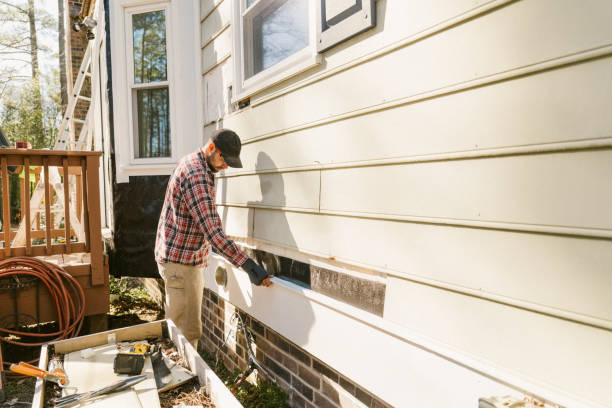
Homeowners across USA call Superior Siding Solutions when their siding is cracked, faded, warped, or just old — we fix it right the first time.


Superior Siding Solutions didn't get into siding to sell you the biggest job possible. We got into it because too many homeowners in USA were getting vague quotes, mismatched panels, and crews who disappeared halfway through a project. We do the opposite: clear scope, clear price, clear timeline.
Manufacturer certifications matter to us because they matter to your warranty. We install James Hardie, LP SmartSide, and major vinyl lines to the letter of their installation guides, not just "close enough."
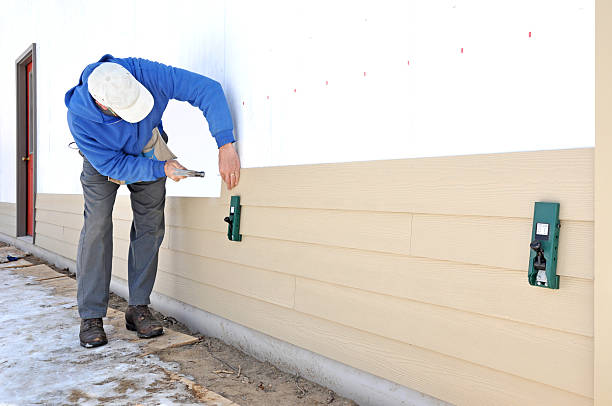
Ask any of our USA crews what matters most on a siding job and you'll hear the same three things: proper flashing, correct nailing (not overdriven, not underdriven), and a starter strip that's actually level.
Most Wood Siding calls we get in USA start with someone noticing one of the issues below and assuming it's minor. Sometimes it is. Often it isn't.
Panels that ripple or pull away from the wall usually mean heat damage, improper nailing, or moisture swelling the material underneath.
Even a small crack near a seam can let enough water through to rot the sheathing behind it within a season or two.
If wallpaper is lifting or drywall feels soft near an outside wall, the siding on that wall has likely failed already.
Insulated siding upgrades routinely tighten up a home's envelope enough to show up on the next few utility bills.
Mold on the exterior surface is a cosmetic problem. Mold behind the panel is a structural one.
Older vinyl and wood siding chalk and fade under UV exposure — it's not just an eyesore, it means the protective surface layer is breaking down.
We don't run a one-size-fits-all crew. Vinyl, fiber cement, storm repair, and insulation upgrades each get handled by teams who specialize in that exact scope.
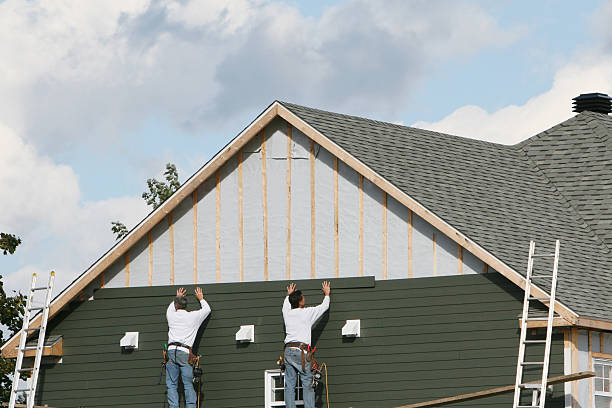
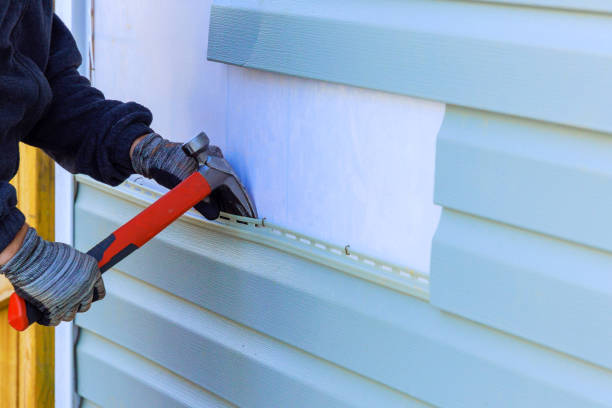
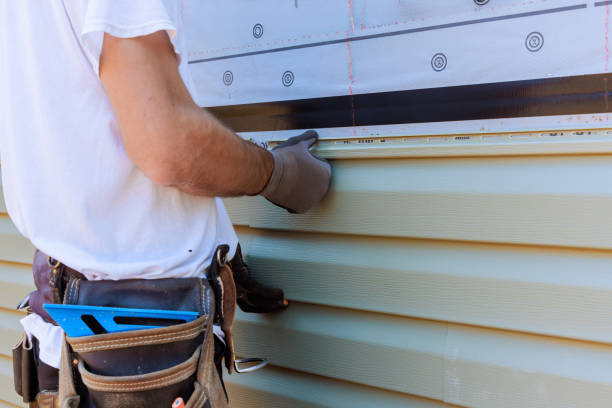
Double-4 and Dutch lap vinyl siding installed with proper starter strip alignment, J-channel around every window and corner, and a nailing pattern that leaves room for thermal expansion.
Color selection includes fade-resistant resin formulations, which matters more in USA than most homeowners realize once the summer sun starts working on a cheaper panel.
Most vinyl re-side jobs on a standard single-family home in USA run a few days from tear-off to final trim, weather permitting.
Fiber cement (James Hardie and comparable lines) offers a heavier, more impact-resistant panel than vinyl, plus a paintable surface for homeowners who want a specific color match.
Because fiber cement is heavier and requires precise cutting, we run dedicated crews trained specifically on HardieZone requirements and manufacturer-approved fastening patterns.
Factory-primed edges still need field touch-up paint at every cut line — a step that gets skipped by crews trying to move faster than the material allows.
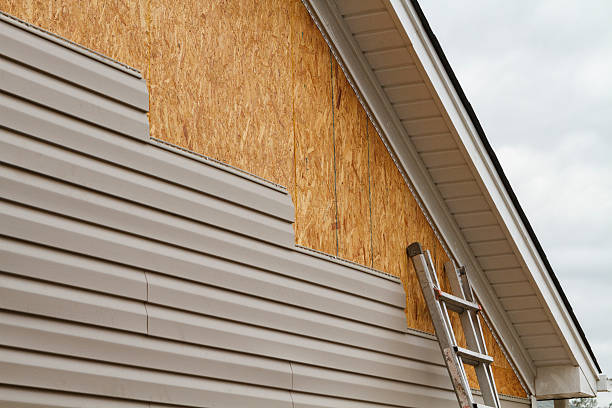
Not every siding problem needs a full re-side. Cracked panels, loose sections, and impact damage from hail or debris often get resolved with targeted panel replacement.
Every repair includes a check behind the removed panel for moisture or rot in the sheathing — patching over a hidden problem just delays the real fix.
Discontinued colors are the most common repair headache — when an exact match isn't possible, we'll suggest a full elevation re-side instead of a mismatched patch that stands out.
Foam-backed insulated siding adds an R-value boost directly at the wall, which shows up as a noticeably steadier indoor temperature and a lighter HVAC load.
This upgrade path is popular with USA homeowners re-siding an older home built before modern energy codes tightened up insulation requirements.
Ask your estimator for a rough payback estimate based on your current utility bills — it varies by home size and existing insulation.
Board and batten and cedar-shake-style vinyl or composite panels give a home a distinct look for accent walls, gables, or full exteriors.
We use these specialty profiles most often on gable accents, porch surrounds, and full-home installs where a homeowner wants something other than standard horizontal lap.
Batten spacing gets laid out and marked before the first board goes up, since uneven spacing is the single most common mistake on a board and batten job.
Siding rarely fails in isolation from the soffit, fascia, and trim around it — we handle all three together so the whole roofline and wall transition seals properly.
Corner posts and trim pieces are replaced with matching profiles so color and shadow lines stay consistent across the whole elevation.
This add-on work is quoted alongside your main siding estimate so there's one clear total, not a separate surprise invoice later.
We schedule the free inspection around your availability, including evenings for homeowners juggling work schedules.
You get a written breakdown of materials, labor, and timeline — not a verbal ballpark that changes once the crew shows up.
Job sites get cleaned daily; nails and panel scraps don't sit in your yard overnight.
Your foreman's direct line stays active after the job closes — warranty issues get routed straight back to the crew that did the install.

If a permit or inspection is required for your project, we handle the paperwork — you're never the one explaining code to an inspector.
We prioritize active leaks and exposed sheathing ahead of routine scheduling — a hole in the wall doesn't wait for a convenient Tuesday.
Your estimate lists materials and labor separately, so you can see exactly what you're paying for before any panel comes off the truck.
We're certified installers for major vinyl, fiber cement, and insulated panel lines, which keeps your product warranty valid instead of voided by an improper install.
If a workmanship issue shows up after the job closes — a gap, a loose panel, a caulking line that fails early — we come back and fix it at no charge during the warranty period.
We don't upsell during the walkthrough. If a repair is genuinely enough, we'll tell you that instead of pushing a full re-side you don't need.


The crew replaced two hail-damaged sections and color-matched them so well I genuinely can't tell where the old siding ends and the new starts.
Quote was itemized down to the J-channel and starter strip, no vague "materials" line item like the last contractor gave us.
Fiber cement install looks sharp and the crew cleaned up every scrap and nail before they left each day, which mattered with two dogs in the yard.
Board and batten accent on our gables came out better than the mockup they showed us during the estimate — genuinely impressed.
Soffit and fascia work fixed a wasp problem we didn't even mention was related to the siding gap they found up near the roofline.
Call now for a free on-site inspection — no pressure, no obligation, just a straight answer about your siding.
Call +1-844-782-0929Our USA coverage area spans multiple local crews — if you're unsure whether your address is covered, a quick call confirms it.